

 |
 |
 |
 |
|||||||||||||||||||||||||||||||||||||||||||||||||||||||||||||||||||||||||||||||||||||||||||||||
 |
||||||||||||||||||||||||||||||||||||||||||||||||||||||||||||||||||||||||||||||||||||||||||||||||||
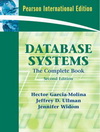 |
Database Systems: The Complete Book 2/e+作者:
Garcia-Molina/Ullman+年份:
2009 年2 版
+ISBN:
9780131354289
+書號:
CS0307P
+規格:
平裝/單色
+頁數:
1252
+出版商:
PH
+參考資訊:


|
定價
$ |


|
本站購物功能已關閉,點選"購物車"圖示會自動連結到新的購書網頁!或與LINE客服諮詢聯繫
讀者購書請至★滄海書局‧鼎隆圖書購書網 ★https://eshop.tsanghai.com.tw/★
滄海ESHOP購書網提供更方便、快速訂購、結帳付款的購書服務,並提供數位產品購買專區~
書籍若有教學輔助配件,僅提供採用老師教學使用,是非賣品,不販售,亦無法提供一般讀者。

For Database Systems and Database Design and Application courses offered at the junior, senior and graduate levels in Computer Science departments.
Written by well-known computer scientists, this introduction to database systems offers a comprehensive approach, focusing on database design, database use, and implementation of database applications and database management systems.
The first half of the book provides in-depth coverage of databases from the point of view of the database designer, user, and application programmer. It covers the latest database standards SQL:1999, SQL/PSM, SQL/CLI, JDBC, ODL, and XML, with broader coverage of SQL than most other texts. The second half of the book provides in-depth coverage of databases from the point of view of the DBMS implementor. It focuses on storage structures, query processing, and transaction management. The book covers the main techniques in these areas with broader coverage of query optimization than most other texts, along with advanced topics including multidimensional and bitmap indexes, distributed transactions, and information integration techniques.
- NEW - GRADIANCE - the most advanced online assessment tool developed for computer science. With its innovative underlying technology, Gradiance turns basic homework assignments and programming labs into true learning experiences for students.
- Many real-world examples.
Offers a readable and engaging presentation.
- Extensive treatment of database modeling–Includes detailed and separate explanations of how to use E/R and ODL to design databases.
Teaches about this important first step of the planning process.
- Excellent, up-to-date and detailed coverage of SQL–Includes coverage of object-relational systems and many aspects of the new SQL:1999 standard.
Provides a more extensive treatment of query processing than other books on the market.
- Discussion of the technologies used to connect database programming with C or Java code–Includes discussions of SQL/PSM, SQL/CLI, and JDBC.
Gives students practical advice on integrating state-of-the-art technologies with databases.
- Coverage of advanced issues important to database designers and users.
Includes discussions of views, integrity constraints, assertions, triggers, transactions, authorization, and recursion in SQL:1999.
- Discussions of how to successfully plan a database application before building it.
Reflects how these plans are developed in the real world.
- Coverage of topics such as designing storage structures and implementing a variety of indexing schemes.
Shows students how to build efficient database management systems.
- Extensive coverage of query processing and optimization.
Shows students how to fine tune database systems to improve performance.
- Comprehensive coverage of transaction processing mechanisms for concurrency control and recovery, including distributed and long-duration transactions.
Shows how to design complex database systems that can handle real-world business applications.
- Coverage of information integration, including data warehousing, mediation, OLAP, data-cube systems, and data mining.
Exposes readers to cutting edge technology used in business applications.
- Extensive exercises–In almost every section.
Provides students with the opportunity to practice and apply the concepts they've learned in each chapter.


PART I: Relational Database Modeling
2 The Relational Model of Data
3 Design Theory for Relational Databases
4 High-Level Database Models
PART II: Relational Database Programming
5 Algebraic and Logical Query Languages
6 The Database Language SQL
7 Constraints and Triggers
8 Views and Indexes
9 SQL in a Server Environment
10 Advanced Topics in Relational Databases
PART III: Modeling and Programming for Semistructured Data
11 The Semistructured-Data Model
12 Programming Languages for XML
PART IV: Database System Implementation
13 Secondary Storage Management
14 Index Structures
15 Query Execution
16 The Query Compiler
17 Coping With System Failures
18 Concurrency Control
19 More About Transaction Management
20 Parallel and Distributed Databases
PART V: Other Issues in Management of Massive Data
21 Information Integration
22 Data Mining
23 Database Systems and the Internet